
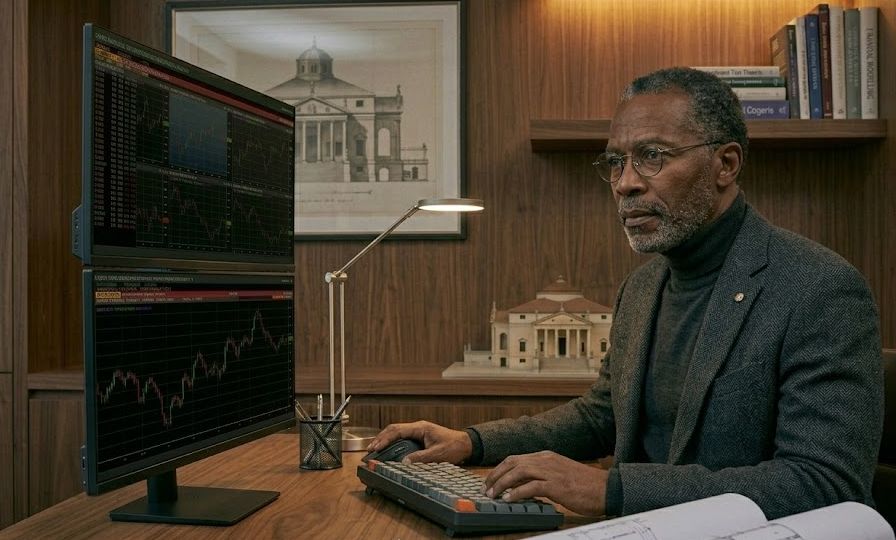
Is Forex Trading Gambling or Skill?
The question of whether forex trading is gambling or a skill-based activity is one of the most frequently asked by people considering entering the market. The honest answer is that it can be both, depending on how it is approached. Trading without a defined edge, sound risk management, or an understanding of market dynamics shares more characteristics with gambling than with a skill-based endeavour. Trading with a tested strategy, disciplined risk management, and a genuine understanding of market mechanics is a different activity entirely.
The distinction matters because it affects how traders approach preparation, learning, and decision-making.
What Makes Something Gambling?
Gambling involves staking money on an outcome that is largely determined by chance, in a situation where the odds are structured against the participant over time. Casino games are designed to give the house a statistical edge, meaning that over a large number of outcomes, the player will lose money on average regardless of any decisions they make.
The defining features of gambling are a negative expected value over time, limited ability to influence outcomes through skill, and reliance on chance as the primary determinant of results.
How Forex Trading Differs from Pure Gambling
Forex trading differs from pure gambling in several meaningful ways.
First, the forex market does not have a house with a fixed built-in edge. Prices are determined by supply and demand from millions of participants worldwide. A trader with a genuine understanding of market dynamics and a tested strategy can theoretically operate with a positive expected value over a large number of trades.
Second, outcomes in forex are influenced by skill and analysis. A trader who understands macroeconomic fundamentals, technical price patterns, risk management principles, and the psychological demands of trading has meaningful advantages over one who does not. These skills can be developed, measured, and improved over time in a way that skills have no bearing on in pure games of chance.
Third, position sizing and risk management allow traders to control their exposure in a way that is not possible in most forms of gambling. A poker player cannot decide that their risk on a single hand is limited to exactly 1% of their bankroll in the way a trader can define exactly how much capital is at risk on each trade.
How Forex Trading Can Resemble Gambling
Despite these differences, forex trading can closely resemble gambling when approached in certain ways.
Trading without a strategy, entering and exiting positions based on intuition or emotion, and sizing positions without reference to any risk management framework produces outcomes that are effectively random from the trader’s perspective. Over time, the costs of trading, including spreads, commissions, and swap charges, will produce a negative expected outcome in the absence of a genuine edge.
Overtrading, chasing losses, and risking amounts that create emotional pressure are behaviours associated with problem gambling and are also among the most common causes of poor trading outcomes. The psychological experience of trading losses can trigger the same emotional responses as gambling losses, making discipline particularly important.
A trader who enters the market without preparation, treats it as a means of making quick money, and abandons positions before any strategy has had time to demonstrate its validity is more accurately described as gambling than trading.
The Role of Probability and Edge
Professional traders think in terms of probability and statistical edge rather than individual trade outcomes. A strategy with a positive expected value does not win every trade. It wins more than it loses, or wins enough when right to more than compensate for losses when wrong, over a sufficiently large number of trades.
This is fundamentally different from gambling. A roulette player has no ability to shift the odds in their favour regardless of how they play. A forex trader who has genuinely identified a repeating market pattern with measurable historical performance has a statistical basis for their approach that does not exist in pure chance-based games.
The challenge is that identifying a genuine edge is difficult, testing it rigorously requires significant time and data, and maintaining the discipline to execute a strategy consistently without emotional interference is one of the hardest aspects of trading. Many traders who believe they have an edge do not, and the results of trading with a false belief in an edge look very similar to gambling outcomes.
What Separates Skilled Traders from Gamblers
Several characteristics distinguish traders who approach the market as a skill-based endeavour from those who treat it as gambling.
Skilled traders maintain detailed records of their trades and analyse the results objectively. They test strategies on historical data before risking real capital. They define their risk on every trade before entering and stick to it. They understand that losses are an inevitable part of trading and manage them accordingly rather than reacting emotionally. They continuously evaluate whether their approach is working based on data rather than feeling.
Gamblers enter on impulse, size based on confidence rather than calculated risk, react emotionally to outcomes, and often abandon their approach when it produces losses rather than evaluating whether the approach itself is sound.
The market itself is neither purely gambling nor purely skill. It is an environment where both approaches are possible, and the outcomes over time tend to reflect which approach a trader is actually taking.
Frequently Asked Questions
Is forex trading gambling? Forex trading can resemble gambling when approached without strategy, risk management, or preparation. Approached with a tested strategy, disciplined risk management, and genuine market knowledge, it has characteristics of a skill-based activity. The distinction depends primarily on how the trader approaches it.
Can you make consistent money in forex? Some traders do make consistent money in forex over the long term. However, consistently profitable trading requires a genuine statistical edge, sound risk management, and the psychological discipline to execute a strategy reliably. These are not easy to develop, and most retail traders do not achieve consistent profitability.
Is forex trading legal? Yes, forex trading is legal in most countries, though the regulatory requirements and available products vary by jurisdiction. Many countries have regulatory frameworks governing forex brokers and the products they can offer to retail clients.
Why do most forex traders lose money? Most retail traders lose money in forex for several reasons, including trading without a tested strategy, using excessive leverage, poor risk management, and emotional decision-making. The costs of trading also create a headwind that any strategy must overcome before becoming profitable.
Is technical analysis skill or guesswork? Technical analysis is a framework for analysing price patterns and identifying probable outcomes based on historical data. Whether it constitutes skill depends on how rigorously it is applied and tested. Used systematically with defined rules and tested against historical data, it can form part of a genuine trading edge. Used casually without testing, it can provide a false sense of analytical rigour while producing essentially random results.
What percentage of forex traders are profitable? Consistently profitable trading is uncommon among retail traders. The exact figures vary by broker, time period, and how profitability is defined, but the proportion of retail traders who are consistently profitable over the long term is generally considered to be a small minority.
How is forex different from sports betting? Both involve predicting outcomes and staking money on those predictions, but forex markets are driven by economic fundamentals and real-world flows of capital rather than the outcomes of events between fixed teams in controlled conditions. Forex markets also allow traders to control their risk precisely, close positions at any time, and adjust their approach continuously, none of which are possible in fixed-odds sports betting.